
Case Study: The West African Landscape Shield
The Challenge
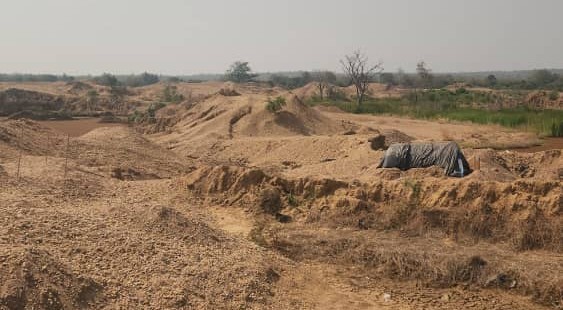
Rapid deforestation, transboundary climate vulnerability, and unregulated artisanal mining (galamsey) have severely compromised 3 million hectares of Ghana’s vital ecological shields, threatening national parks and contaminating the critical Pra River Basin.
The Intervention
Backed by the World Bank, the Environmental Protection Agency (EPA), and the Ministry of Lands and Natural Resources (MLNR), ENS transitioned high-level safeguard policies into deep, field-level execution. This landmark initiative deploys large-scale reforestation, defensive green firebreaks, and agroforestry grids across the Northern Savannah and Cocoa Forest landscapes. Concurrently, the project builds local capacity by formalizing artisanal mining operations and equipping smallholder farmers with sustainable land management (SLM) frameworks.
The Outcome
A scalable, turnkey masterclass in regional environmental governance that successfully stabilizes baseline habitats, secures critical water resources, protects biodiversity hotspots, and establishes green, climate-resilient economic livelihoods for thousands of West African families.
3M Hectare Orthogonal Grid
Architecting forward-facing ecological corridors across the Northern Savannah Zone (Upper West, Northern, and Savannah regions) and the Cocoa Forest Landscape. We bridge high-level policy whiteboards with physical landscape boundaries to maximize biodiversity connectivity.
Active Buffer Safeguards
Deploying rigorous reforestation and defensive green firebreaks directly inside vulnerable wildlife reserves, including Mole National Park, Gbele Resource Reserve, and Digya National Park to secure baseline habitats against wildfire degradation.
Pra River Basin Reclamation
Intercepting toxic runoffs and heavy metal vulnerabilities by engineering integrated eco-filters along key tributaries. This methodology replaces destructive habits with sustainable land and water management models.
Interdependent User Networks
Delivering technical inputs and direct extension support for agroforestry to local farming families. By pairing advanced environmental metrics with native agricultural wisdom, we turn land security into immediate financial yields.
Working directly on-site to formalize Artisanal and Small-Scale Mining (ASM). We transition illegal, high-degradation (galamsey) operations into structured, legally compliant, and sustainable mining techniques.
What the Benefits?
By substituting passive legacy frameworks with active, high-capacity nature-based engineering solutions, the GLRSSMP establishes premier benchmarks for regional environmental execution:
- Verified Carbon Architecture: Drastically scales up carbon capture and soil health potential through strategic agroforestry grids across 3 million hectares.
- Ecosystem Defense Systems: Halts illegal environmental incursions, securing national park perimeters and protecting migratory bird and mammal sanctuaries.
- Turnkey Local Capacities: Replaces vulnerable climate cycles with long-term economic resilience, empowering thousands of local agricultural and mining stakeholders as active, ethical custodians.